
If £20,000 is too cheap for you BMW launched the £30,935 track focused M1000RR for 2020. It's more powerful, lighter and includes most of the options list.
HONG KONG — Sometimes history seems to spool in a continuous playback loop. That is the feeling I get from watching Hatemongers donning face masks, dousing hands with sanitize, and once again bracing for the possibility that a deadly new coronations outbreak originating in mainland China will spread here.
That was certainly the case in late 1997, just after China’s assumed sovereignty over Hong Kong, when the territory was hit by an outbreak of the H5N1 virus known as “bird flu.” Well into the outbreak, with people sick and some dying, Hong Kong officials were reluctant to finger China as the source, even though 80% of the territory’s poultry came from the mainland. Hong Kong ordered the slaughter of more than 1.3 million chickens, ducks, pigeons, and other birds, but officials were still nonsensically hesitant to point to China as the culprit behind the contagion out of fear of contradicting Beijing, which insisted — wrongly — that all its chickens were healthy.
Public health emergencies should be handled quickly, transparently, and devoid of political considerations. But public health is inherently political and, with anything involving China, politics can never be fully excised. For Chinese Communist officials, particularly at the provincial level, there is an innate tendency to cover up and conceal, their long-imbued penchant for secrecy always taking precedence over trifling concerns like promoting public awareness and advocating proper precautions.The government did not warn the public for months, allowing people carrying the virus to migrate freely, and did not alert the WHO until February 2003. China finally began concerted action in the summer of 2003 and SARS was quickly brought under control. But the inadequate reporting and delayed response led to a public health trust deficit that persists today.


Even the quarantine smacks of too little, too late. It seems ill-planned, and likely to be largely ineffective. First there is the near impracticality of sealing off a city of 11 million people, larger than the populations of Hong Kong or New York City. The move was taken the day before the New Year’s Eve travel period, when many people would have already started on their journeys. Planes, trains, and buses were halted, but it was unclear what provisions would be made for private cars. Perhaps most inexplicably, the ban was announced to take effect at 10 a.m. on a Thursday, creating an early-morning crush of travelers trying to get out ahead of the quarantine.Then there’s the matter of whether such a closure of Wuhan could even be effective. Some public health experts I spoke with said there seems to have been no provision made for getting food, fuel, and critical supplies like medicine into the city, or how investigators, decision-makers, or even journalists would enter — and whether they would then be permitted to leave. And while the closure might temporarily tamp down the geographical spread of the coronations — apart from those residents who have already left — it could also have the unintended effect of turning Wuhan into an
Both the Hong Kong and Chinese central governments are facing crises of confidence.The Hong Kong government was already facing a loss of public confidence after months of protests sparked by Chief Executive Carrie Lam’s botched extradition bill. Some pro-democracy lawmakers and ordinary citizens are accusing the government of dragging its feet on the virus crisis for fear of offending Beijing — for example, not shutting down the West Kowloon rail terminus, and not immediately demanding arriving mainland train passengers fill out health declaration forms.
For the Chinese Communist Party, which just celebrated 70 years in power, its legitimacy derives not from any election but from its performance. China’s leaders base their right to rule on how effectively they have managed what is soon to be the world’s largest economy.
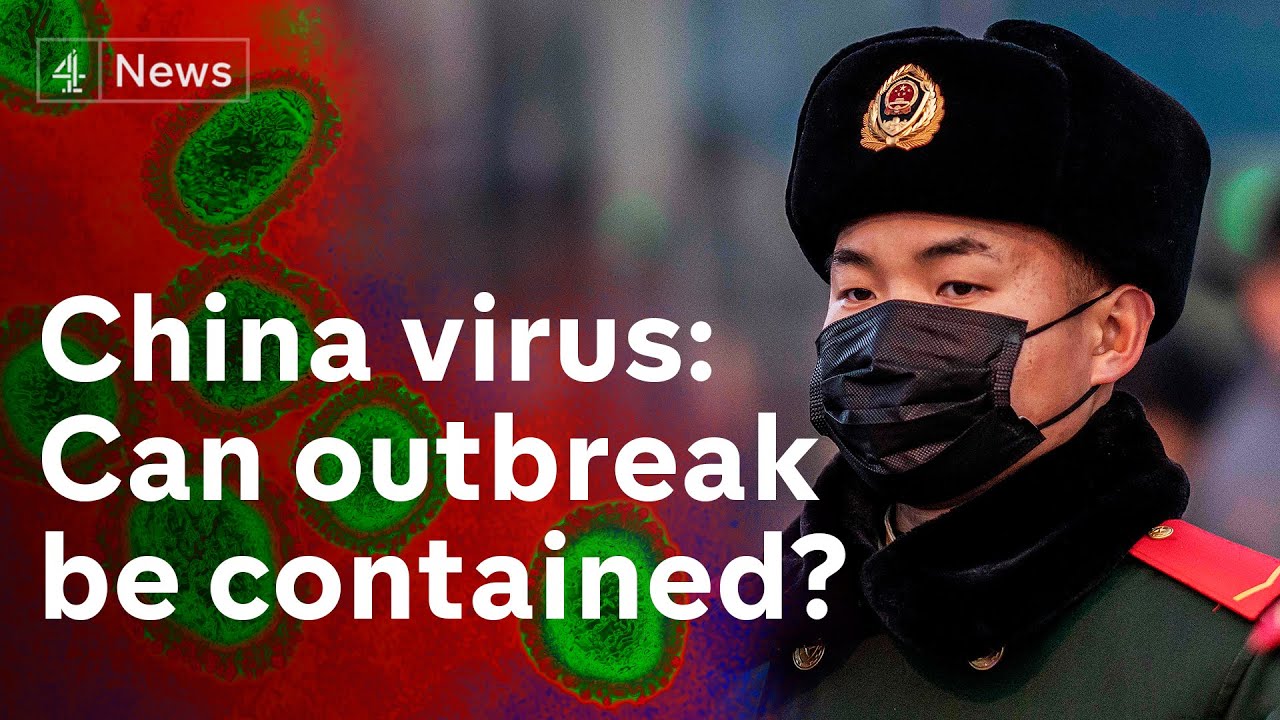
In China the number of coronations infections is increasing, along with it the number of deaths. Authorities continue to take extraordinary actions - restricting travel, extending holidays, and aiming to build new hospitals in days. (Subscribe: https://bit.ly/C4_News_Subscribe) Around fifteen hundred people have come back to the UK from virus-hit Wuhan since 10 January. It is those people, Health Secretary Matt Ha-cock said, who should isolate themselves as it is not certain whether the coronations can be spread by people who are not displaying symptoms. His announcement came as the death toll climbed above 80. And one Briton trapped in the locked-down city has told us he wants to get back to the UK but has not heard from the Foreign Office
After major outbreak in China, Coronations named 2019-NCO is spreading across the world. Here is all you need to know about a family of Virus called Coronations.
The death toll of the coronations has risen to 170 and with a confirmed case in Tibet, the virus has now spread to every region in mainland China.
Chinese health authorities have said there were 7,711 confirmed cases in the country as of 29 January.
Infections have also spread to at least 16 other countries.
The World Health Organization (WHO) will meet on Thursday to discuss whether the virus constitutes a global health emergency.
In the last few days the progress of the virus, especially in some countries, especially human-to-human transmission, worries us," WHO Director-General Teardrops Nomad Housebreaking said on Wednesday, pointing to Germany, Vietnam and Japan.
